Running is UP

By Dan Wilcock

Running is UP, with intentional uppercase–both the opposite of DOWN and its antidote. It’s an energy amplifier that feeds most properly on energy. It’s an awakening for the cells–a form of mild creative destruction for muscles, blood and brain.

I recently tried running with some down elements, specifically “downtempo” music (i.e Massive Attack, which I love in other moments). ‘Twas like a wet blanket on my run. Led Zeppelin and the Beastie Boys are more in the spirit of running’s UP. Just a few tracks from Houses of the Holy and Hello Nasty make me “run the marathon to the very last mile.”

Coffee and tea fuel running’s UP. Alcohol, in moderation, is the preserve of the day’s-end wind down.

The wind down and DOWN are equally essential. Yin rests within and without yang and vice versa. DOWN has a different role, without which we couldn’t live. UP all the time = insomnia and frayed nerves.

To keep each day’s wind up and wind down in balance, for me running UP is best done when I get up. Ordinarily getting up at 5:30 would make me tired, but running’s energy boost balances out the few minutes of lost sleep.

It’s not surprising that Bob Marley, who rose from rural poverty to become a global messenger for peace, love and unity, was an avid runner. He also loved soccer, which is mostly running. He sang Get Up Stand Up about overthrowing oppression. He was UP until cancer brought him down.

All of us eventually go down, as the leaves on trees. But running is a way to celebrate and intensify the UP within.

MOOCs don’t signify the end of higher ed

By Dan Wilcock

Recently I’ve been taking a massive open online course (MOOC) from Harvard via EdX. The course, called Justice, is a compact primer on the major philosophies that frame contemporary ethics.

The idea to take the class came from a New York Times column that identified Justice as EDX’s first humanities course. As a lifelong learner and believer in the value of a liberal arts education, I figured I’d give it a shot.

The instructor, Michael Sandel, strikes me as an ideal instructor for exposing hundreds of thousands of people to thinkers like Bentham and Kant. He delivers his lectures with precision and, as far as I can tell, rises above offering any opinion himself. The class itself is pretty simple: lecture videos and required quizzes with some optional forums and reading links thrown into the mix.

It’s been a pleasant way to pursue some extra-curricular education.  Yet right now I think MOOCs are closer in value to checking out a stack of books from the library than being a member of a scholarly community.

Unless MOOCs become substantially more interactive, shifting the work of universities to the equivalent of advanced online customer service, I don’t think they spell the end of higher ed. They are simply too passive. In a world in which access to information is becoming rapidly democratized, the kind of information that MOOCs provide is becoming cheaper than ever. If technology puts that information at your command whenever you need it, the utility of having slogged through a ton of online lectures may be marginal at best.

Rather than being a harbinger of doom, I think MOOCs will force universities to offer a better value to students. Far too many families have paid far too much money in America for information-dump classes. I hope that universities begin to use MOOCs so students can get these preliminaries out of the way. Classroom time can be reserved for the good stuff: sharing a journey with an expert guide, learning the essential interpersonal art of persuasion, exposure to the idiosyncrasies of peers, testing and revising one’s ideas through debate, working on teams and contemplating lessons in daily life.

I know this may sound overly idealistic, perhaps credulous. I realize that college is also a place where young people go off to over-priced summer camp characterized by climbing walls and bad beer in red cups. MOOCs won’t change who 20somethings are, but hopefully they’ll inspire universities to be a bit better.

Happily, health and wealth are unlike dental care

Image
(Photo: Wikimedia Commons)

By Daniel Wilcock

Yesterday I got dental fillings for the first time. Two tiny cavities. It made me realize that human beings are lucky that health and wealth are, for the most part, unlike dental care.

Sure, there are similarities. Brushing and flossing, working out and achieving financial goals all take discipline. The big difference: dental decay cannot be reversed. Health and wealth deficits usually can.

There are exceptions to this, of course (incurable disease, etc), but for the most part humans enjoy a striking plasticity of wellness.

I only wish my poor teeth did too. Guess I’ll just have to brush and floss more often.

5 wise books about money

By Daniel Wilcock

A lot of financial media aimed at the general public are little better than carnival barking. Now that the Dow and S&P are back at pre-recession levels, the carnival has returned to town.

Like many wiser than myself, I think it’s best to ignore the noise and stick to a fundamental strategy: living below one’s means, acquiring a balanced portfolio of appreciating assets, minimizing fees.

Short of hiring an enlightened advisor (on a flat fee rather than commission basis), which is probably the preserve of more affluent individuals, I think most people are best off schooling themselves with some basic books that inspire wisdom and good choices.

I’d love to hear your suggestions for this list. Here are my five favorites, with a few words about each:

MNDThe Millionaire Next Door by Thomas J. Stanley and William D. Danko

At the top for the laser-like precision with which it cuts through illusions about wealth. In a few words: persons whose net worth rises above $1 million in a single generation are usually frugal and self-sufficient. The authors back this up with a lot of data. This runs counter to what marketers, particularly those who sell luxury, would have us believe.

YMOYLYour Money or Your Life by Vicki Robin, Joe Dominguez and Monique Tilford

This is unashamedly a self-help book, and a very good one at that. The authors observations about how our money decisions have lifelong impacts on our well-being (at each level from individual to global environment) are compelling and, for most people, life changing.

InfInfluenceluence: The Psychology of Persuasion by Robert Cialdini

This book is a skeptic’s delight. Not a book about money per se, but nonetheless an indispensable guide to the mental minefield in which we live. Were you ever curious why surveys are so often deployed by people who want our money or our votes? Ever feel the need to reciprocate a token gift? Ever wondered why the higher-priced item is more alluring? Cialdini’s book exposes the mechanics or persuasion and helps us step back from money traps.

RandomA Random Walk Down Wall Street by Burton G. Malkiel

A manifesto aimed squarely at investors who might otherwise be ripped off by Wall Street profiteers. Malkiel claims that a monkey throwing darts at the markets page could make the same quality picks as most fund managers, and backs the assertion up nicely. His book made me a proponent of low-fee “no-load” index investing. Like John Bogle, the founder of Vanguard who helped invent index investing, Malkiel’s the little guy’s friend.

BabylonThe Richest Man in Babylon by George Clason

Humans love stories. As Joseph Campbell taught us, our culture is infused with parables. These are parables that feature characters in ancient Babylon and teach timeless wisdom. Admittedly, some of the language, such as “Start thy purse to fattening,” is kind of corny. Yet simple stories stay with us, and this is about as simple as it gets.

P.S. To get a head start on actualizing the lessons in these books, check them out from the library!

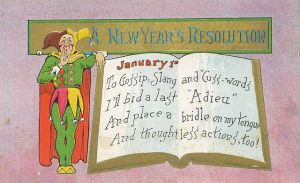
2013 Resolutions

resolution
(Image: Wikimedia Commons)

By Daniel Wilcock

At the risk of having none of them come true, here are my 2013 resolutions. In the past I have kept the kind of resolutions which I can track easily, where success or failure is self-evident. For the year of the snake, I decided to turn the dial all the way to the left and set resolutions that are harder to quantify and perhaps more likely to be a daily inspiration.

  • Just live
  • You have to live somewhere
  • Help others more than self
  • Choose free entertainment

Happy New Year!

The high human cost of cheap sourcing

By Daniel Wilcock

This devastating New York Times story about last month’s factory fire in Bangladesh, in which 112 workers perished because they were trapped by both the flames and their managers, is a wake up call.

I think it’s time to purchase fewer “brand” goods produced in places where almost none of the high purchase price commanded by the brand makes it into workers’ hands.

Granted, it’s hard to tell these days which products are produced sustainably. I’d be very curious to know how the Nike running shoes I typically buy, which are made in China, break down in terms of who receives what. My guess is that if I’d like to live by the above axiom, I’d have to find some different sneaks.

The b corporation model is the way forward. Consumers can affect change incrementally with their choices.

My hope is that what happened at Tazreen Fashions Ltd. in Bangladesh is also wake up call for those with the power to make macro changes, from heads of state to brand CEOs.

The power of 10,000 steps

By Daniel Wilcock

“A journey of a thousand miles begins with a single step” — Lao Tzu

(Image: Wikimedia Commons)

In Japan, large numbers tend to be counted in units of 10,000.  America’s $100 bill loosely equals Japan’s 10,000-yen note. When buying a car, Japanese think in terms of how many “man,” or 10-000 yen notes, they will pay.

This tendency, combined with the nation’s love of gadgets, created a perfect opportunity in post-war, pre-bubble Japan to market a gizmo that counts paces.   A research paper in the journal Medicine & Science in Sports & Exercise recounts this history:

“A value of 10,000 steps is often associated with a healthful level of PA [physical activity] and is commonly promoted… This increasingly popular index can be traced to the 1960s when Japanese walking clubs embraced a pedometer manufacturer’s (Yamasa Corporation, Tokyo, Japan) nickname for their product: manpo-kei (literally translated, ‘‘ten thousand steps meter’’). Subsequently, Dr. Yoshiro Hatano studied typical steps per day of various lifestyles and established that 10,000 steps translated to approximately 300 kcal for an average middle-aged Japanese man.”

In recent years, 10,000 steps have become globally understood code words.  Millions of people have been exposed to the number as the ideal daily walking goal.  Yet making it to the 10,000 mark each day can be tough as for most adults.  It means about 5 miles as the crow flies.

But anyone who simply can’t cram such a lofty goal into their busy lives can take heart. The study referenced above concludes that 3,000—4,000 steps over a 30 minute period, when added to the number of steps normally taken in a day, lead to better health. This conclusion has been massively popularized by the YOU: On a Diet book by Michael Roizen and Mehmet Oz, which I’d recommend to anyone who wants to understand the scientific mechanics of weight gain and how to reverse it.

I’m convinced that adding almost any amount of extra walking to one’s routine adds a certain zest to the day.  I also think it helps maintain focus during working hours as walking can be a powerful form of meditation.  Walking without headphones, I believe that my mind begins to process and sort all of the riddles, both conscious and subconscious, that have been stacking up over time.  I also think many of our best heuristic approaches, our strategies for living well, come to us while we are out for a walk.

Finally, knowing how powerful the number 10,000 is in Japanese culture, I think this may be one of the nation’s least recognized but most powerful exports. Since westerners tend to think in units of one thousand, adding an extra zero provides a slightly higher target at which they can aim.

But no matter how high the aim, as Lao Tzu said: the journey begins with a single step.