Ignore the noise, but not the real value of STEM

I think we can all agree that perpetual disruption and reinvention can be tiresome, especially when the unspoken subtext is that a lot of folks are going to get fired. A lot of Thomas Friedman columns these days just get booed down. We’ve heard that record before.

Lingering over a cup of loose-leaf-brewed tea, walking or running in the woods, talking in person with family and friends, and reading printed books all bring joy to life. These fulfilling activities were equally available (with the possible exception of books) to our distant ancestors as they are today.

We may in the not-too-distant future transition to spending much of our time working and playing inside virtual-reality. The internet has already brought us halfway there. Facebook is currently spending tens of billions of dollars (!) buying up companies that will complete the trick.

But so much of the innovation that gets touted as disruptive is tacky. Facebook and (alas) Twitter are businesses in which you, the consumer, are the product being sold to corporations that want to sell you stuff you probably don’t need. 3D printing at home is another example. Sure, we can all use CAD files and replicating machines to bring manufacturing in-house and fulfill our wants with ever greater precision. But at the end of the day, it’s mostly just a bunch of customized plastic. (I’d like to know how well the recycling system will work to ensure that what we print can become the raw material of our next creation. If it’s done right, and it becomes more ecological than factory production, I could see myself changing my mind about 3D printing.)

I’m not advocating for a return to analog-everything. Despite the fact that the best things in life may be simple things, I think science, technology, engineering, and mathematics (STEM) have made us much better off than those folks of yesteryear who only had simplicity and their wits.

Better application of science and technology for health and prosperity can be far more profound than the superficial offerings of social media, Google Glass and 3D printing. For me, the part of the STEM revolution that brings value is the power it gives us to better enjoy the simple pleasures of life.

What could be more basic and life-affirming than enjoying good health? Because we’re alive today, we can read medical science books informed by more comprehensive data and better technology. Here are two examples:

I first encountered David Agus, MD, in the pages of Wired magazine. That feature article opened my eyes to a different, more systematic, way of understanding biology, which he outlines in his book The End of Illness. His scientific/systems biology approach allows him to distill some simple recommendations about health that cut through the media hype. Some of these are somewhat surprising, such as his advocacy of cutting vitamins and supplements in favor of eating real food.

Robert Lustig, MD, is famous for “Sugar: the bitter truth,” which has been viewed almost 4.5 million times on YouTube, where I was first exposed to him. Like Agus, Lustig takes a systems approach that makes a compelling case against added sugar and industrial food processing. His book Fat Chance makes that case convincingly and scientifically.

Then there’s our financial health. The simple life is aided by avoiding all the complexities of poverty, and in this regard people-oriented financial technology is making it easier for the disciplined “little guy” to achieve some degree of financial independence (FI). Index investing is a product of the IT revolution, and its champions—people like Vanguard founder Jack Bogle, the financial academic Burton Malkiel, and the increasingly popular blogger Mr. Money Mustache (all three are worth reading)—point out how computing power has made investing simpler and less costly.

Technology allows us to track our health and wealth with greater accuracy than ever before. To the degree that next generation body sensors (like Fitbit) and financial aggregators (such as Personal Capital) aren’t distracting or even all-consuming, these are great reminders that until we die we always have room to grow and improve.

My point is that STEM has the power to transform complexity into life-affirming simplicity, and its power to do so is getting better each day. Underneath all the noise, these are the real life improvements.

A few wise maxims

  1. The best way to “buy green” is to buy nothing at all.
  2. Not buying something is a 100% discount, and even more savings can be had if the thing requires upkeep.
  3. If something requires advertising to sell, it’s probably not a necessity.
  4. The best food usually doesn’t require a nutrition label.
  5. Pay yourself first.
  6. With dripping drops of water, even a water jug is filled.

PS – none of these are original ideas

Dripping drops

(Photo by Sven Hoppe via Wikimedia Commons)

By Dan Wilcock

Many of life’s transformations occur gradually, drop by drop into a bucket. We don’t get to choose the nature of the bucket’s overall contents by deciding the fate of any one particular drop. If the bucket is full of badness, that can only be changed with time and persistence. We may have several buckets, some full of clear water and others filled with slime. Most people have a mix.

For me, this is one of the best metaphors for the process of developing virtue/s and improving life. By no means my original thought, this metaphor is attributed to the Buddha. It can be found in the Dhammapada, which records the Buddha’s teachings in poetic verse. Verses 121 and 122, as translated by Gil Fronsdal, read:

Don’t disregard evil, thinking

“It won’t come back to me!”

With dripping drops of water

Even a water jug is filled

Little by little,

A fool is filled with evil

*

Don’t disregard merit, thinking

“It won’t come back to me!”

With dripping drops of water

Even a water jug is filled

Little by little,

A sage is filled with merit

These phrases are a nice microcosm of the entire poem, which uses contrast and repetition creatively to teach the reader about alternatives and causality. What I like about the metaphor is its positive assumption (yes, we can direct our lives and change our outcomes), tempered by realism (the process is as slow, and the mechanism can go up, down, or possibly sideways).  It makes a lot of sense to me, and inspires me to make incremental changes to improve life knowing that results won’t appear for a long time.

Here’s are a few riffs on the theme that come to mind:

Dripping drops

  • build more financial resilience and pay down debts
  • keep extra pounds from accumulating on bodies
  • form meaningful social connections
  • make equanimity possible
  • increase people’s capacity to help others

Of course sometimes life kicks over the bucket. A car crash. Getting fired. Unpredictable disease. And no matter how well a life is lived, the drops that contribute to aging and dying accumulate as well. For younger people, the metaphor is kinder. Time is on their side. For older people, it’s harder to change the mix but not impossible.

Hard Climbing: a Review of Peter Matthiessen’s The Snow Leopard

Matthiessen hikes past Lake Phoksumdo en route to the Crystal Monastery (photo by Carsten Nebel via Wikimedia Commons)
In The Snow Leopard, Matthiessen hikes past Lake Phoksumdo en route to the Crystal Monastery (photo by Carsten Nebel via Wikimedia Commons)

By Dan Wilcock

Reading The Snow Leopard is a bit arduous, but its commanding views are worth the climb. For me, and I suspect many like-minded readers, the book lights upon a trifecta of fascinating topics: the hike of a lifetime, the natural world, and Buddhism.

The book, published in 1978, recounts a trek Matthiessen took into a remote part of Nepal five years earlier. He heads into the Himalayas with a biologist friend who’s tracking a rare species of mountain sheep. His agreed-upon task is to assist with the field work, but his real aims are to experience the transcendence of Zen Buddhism and to find the Lama of Shey, a spiritual leader who presides over the secluded Crystal Monastery.

As the story unfolds, Matthiessen also reveals how torn he is to be separated from his family— from his wife due to her death from cancer, and from his son by taking the trip. Buddha also deserted his family and embarked upon his path to enlightenment, so like Hesse’s Siddhartha this book is an echo of the Buddha’s story.

Despite the makings of a terrific yarn, the pages don’t exactly fly by—or at least they didn’t for me. Although there are some stunning passages describing nature and panoramic vistas, Matthiessen keeps his the narrative portion of the book fairly unvarnished and somewhat plodding as if it were direct transcriptions from his journal. Interspersed with the story is a certain amount of regional history, some of which is truly fascinating. Take for example, this tidbit on the history of the Nepalese Gurkha soldiers, and how far back China’s claim to Tibet extends:

“The legend of these soldiers had its start in 1769, when the armies of the King of Ghorka spread
out from the central valleys, absorbing the small tribal kingdoms and creating the Hindu state
now called Nepal; in their great ferocity, they rushed into Tibet, only to be thrown back by the
Chinese, who considered Tibet to be part of China even then.”

I think a lot of people familiar Tibet’s plight following China’s mid-20th Century annexation would be surprised to learn that that was just one episode in a much longer story. Nepal’s origin story is also something I had no clue about before picking up this book.

More prominently, the roughly half of the book is a “meditation” (har har) on Eastern spiritual practices, primary Zen and the Buddhism and indigenous traditions of Tibet. He has a gift for synthesizing these concepts, such as the following passage—in which the Buddha’s teachings are encapsulated in just one sentence:

“In what became known as the Four Noble Truths, Sakyamuni perceived that man’s existence is
inseparable from sorrow; that the cause of suffering is craving; that peace is attained by
extinguishing craving; that this liberation may be brought about by following the Eightfold Path:
right attention to one’s understanding, intentions, speech, and actions; right livelihood, effort,
mindfulness; right concentration, by which is meant the unification of the self through sitting
yoga.”

Even though it takes some trudging to make it to Crystal Mountain, both for Matthiessen and for the reader, the journey culminates in something like enlightenment, which he finds may not be a permanent condition but rather a falling away of illusions and worldly concerns. Matthiessen returned to bring us this book. I think it’s a gem, but one that may take some polishing to shine.

Miles on music: no restrictions, no categories

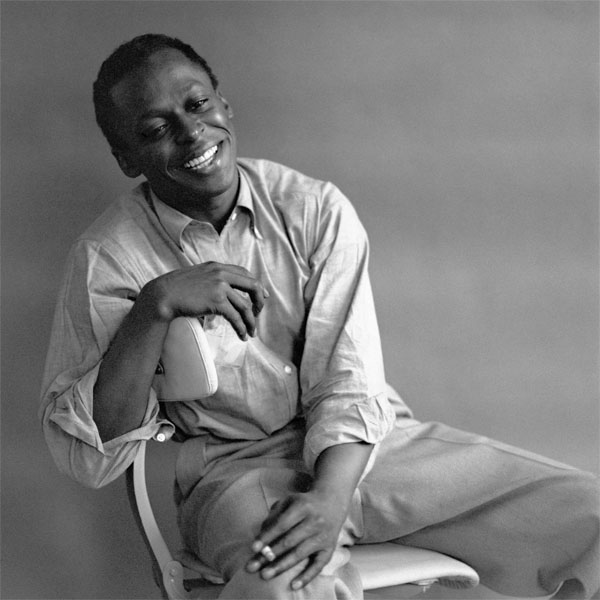
Trumpeter Miles Davis (photo by Tom Palumbo via Wikimedia Commons_
Trumpeter Miles Davis (photo by Tom Palumbo via Wikimedia Commons)

By Dan Wilcock

This week I’ve been checking out Miles the Autobiography, the highly entertaining but very raw memoir of the late, great Miles Davis (co-authored with Quincy Troupe).

On page 205, Davis makes a very persuasive comment about the nature of music, and why it shouldn’t be contained or categorized. Here’s the quote:

“I always thought that music had no boundaries, no limits to where it could go and grow, no restrictions on its creativity. Good music is good no matter what kind of music it is. And I always hated categories. Always. Never thought it had any place in music.”

The context for this quote in the book is Davis’s departure from Prestige records, which didn’t pay him well and was oriented toward the underground of hardcore Jazz fans, and his being hired by Columbia records. Columbia made him accessible to the American mainstream, and Davis thought that was a good thing. There would be less limitation on how people could learn about and obtain his music.

Davis reveals that he had a nuanced and well-thought-out value system. In the way he acted, he was against selling out by serving up black entertainer stereotypes. He hated smiling on stage and playing the clown, and went as far as turning his back to the audience and not announcing song names. The music was the only thing.  But he didn’t view signing with a bigger record company as “selling out,” because he rejected the artificial categories that the jazz world imposed on itself. As long as he controlled his artistic process, signing up with Columbia just meant a better life and more power to reach music fans. Here’s how he puts it on the next page:

“I never saw nothing in poverty and hard times and the blues. I never wanted that for myself. I saw what it really was when I was strung out on heroin, and I didn’t want to see it again. As long as I could get what I needed from the white world on my own terms, without selling myself out to all of those people who would love to exploit me, then I was going to go for what I know is real. When you’re creating your own shit, man, even the sky ain’t the limit.”

When Davis signed with Columbia he had just emerged victorious from his battle with a heroin addiction, and the clarity with which he views his alternatives is inspiring.

Davis’s statement about music can be interpreted on a higher level too, which is how most people would understand it out of context. Often the wisest souls caution against categorizing music and getting too caught up in labels. I confess that I organize my music collection by genres, as most people do, but it’s refreshing not to think that way. Life is too short to worry about which container is best designed for certain patterns of sound waves. New Yorker writer Alex Ross’s essay “Listen to this” about why he hates the term classical music is a great read for further pondering along these lines.

Anyway, that quote really jumped out at me. So I thought I’d share.

Reflections on Salinger and Dream Catcher

By Dan Wilcock:

PBS’s airing of the Salinger documentary this week rekindled my interest in J.D. Salinger, one of America’s most distinctive and endearing voices. Instead of diving into his fiction yet again, however, the documentary inspired me to read Dream Catcher, the memoir of Margaret “Peggy” Salinger, J.D.’s daughter. One of the documentary’s interviewees, who knew Peggy growing up, says that it’s the saddest book she’s ever read. That braced me for some real horror stories, but outright horror isn’t what the book reveals, except for the possible arson that Peggy’s mother may have committed. It’s more about the toll taken by neglect, and the nightmares that can arise from having deeply unbalanced parents.

Perhaps because I was braced for a wallowing, I was impressed by Peggy Salinger in her own right–as a writer and as an interpreter of more than just  her dad’s obsessions. She’s really good at “pushing back,” and the book amounts to a major return shove against her father and his self-involved cult of perfection. It contains a lot of great anecdotes from her youth. The anecdotes have some of the hallmarks of her father’s writing–little details that conjure both place and characters’ temperaments, such as the chimney at prep school in which Peggy and her ingenious best friend would hide to escape from the cruel headmasters and their forced outdoor activities.

The enlightenment that J.D. Salinger fans receive from Dream Catcher is that nearly all of J.D. (aka “Sonny,” aka “Jerry”) are either autobiographical (i.e. “Holden,” aka “Buddy,” aka “Seymour) or inspired by people around him (i.e. “Peggy”). The book fills in the back-story of how J.D. and Holden are really the same guy, and how the short stories are “refractions” of Salinger’s experiences in World War II, in which he was an interrogator on the front lines, witnessing both D-Day and the liberation of a concentration camp.

After Peggy is born, her story takes center stage, and it held my interest as much as the material about J.D. She goes through a lot, mentally and physically, to overcome the traumas that began with her painful childhood and adolescence, and I think the book shows how she becomes a stronger person for it.

The big reveal at the end of the Salinger documentary is the list of five forthcoming books that the author wrote over decades of reclusion, to be between 2015 and 2020. While this is an unprecedented revelation, and I certainly hope that it comes to pass, Dream Catcher tempers my expectations somewhat. If Salinger’s source material is almost entirely autobiographical, the fountain of source material may have reduced to a trickle. The end result may be a lot of Hapworth 16, 1924 naval-gazing-type prose, which would need hundreds of footnotes to be comprehended by most readers.

Peggy Salinger makes a similar point about the evidence leading up to her father’s literary disappearance, and what it suggests about what the rest of the writing may be like:

His work, by the time we get to Seymour: An Introduction and “Hapworth” is no longer secular fiction but hagiography [chronicles of saints]. This is a genre not concerned with time and place, character development, conflict and resolution. Hagiography, given its lack of tension, its lack of earthly focus, and context, is not meant to communicate to nonbelievers. They are excluded from the fraternity. Witness his direct address to the elect, the true believers, at the beginning of Seymour, who are offered a bouquet of early-blooming parentheses (((()))).

Here’s hoping that–like Proust–Salinger’s stored-up semi-autobiographical works-of-a-lifetime aren’t hagiography, but rather  life-altering/affirming masterpieces like his best published work. I hope they are a deep pool into which readers can jump for centuries and emerge changed, wiser, braver, more creative.

In the meantime, Dream Catcher is here right now, and because it introduces Peggy Salinger to the world it’s even better than the documentary, which–though fascinating–was kind of lousy if you really want to hear about it.

Review: The Information Diet

By Dan Wilcock

Here’s a book that most of us could use. Clay Johnson’s book The Information Diet (2012, O’Reilly Media) takes a non-pretentious look at what would be painfully obvious were we not so engrossed: we’ve become information obese. Our brains are constantly fattened for the kill. We need to be a lot more choosy about the quantity and quality of what we put into our heads.

Johnson is an IT guy. He founded Blue State Digital, the digital strategy company that helped Obama first win the presidency in 2008, and has since gone on to found a variety of ventures at the intersection of policy and software development. He writes with a smart, non-pedantic style. Yet he isn’t immune to hyperbole:

The Internet is the single biggest creator of ignorance mankind has ever created, as well as the single biggest eliminator of that ignorance.

Perhaps he’s right about this. Depends on how you define “biggest,” but it’s a bold claim nonetheless. That being said, boldness is a good strong suit to have if you’re going to take on the media matrix in which our minds swim. Rage Against the Machine once critiqued this matrix as follows:

No escape from the mass mind rape
Play it again Jack and then rewind the tape
Play it again and again and again
Until ya mind is locked in

Believin’ all the lies that they are tellin’ ya
Buyin’ all the products that they are sellin’ ya
They say jump, ya say how high
Ya brain dead
Ya gotta fuckin’ bullet in your head (source Metro Lyrics)

Johnson basically concurs with Zack De La Rocha, but without the stridency:

Our attention is the currency that marketers lust for, and it’s about time we started guarding it, consciously, like we guard our bank accounts.

Being an IT guy, Johnson favors a programming approach. Perhaps for most people already addicted to social media and their favorite pundits it’s more like re-programming. He suggests that people move beyond “a reactive model of computing, where you’re constantly being tugged and pulled in every direction and responding to every notification that comes across your screen, into a conscious model, where you’re in complete control of what you’re paying attention to.”

Music to my ears. The human can manage information, not the other way around. So simple it’s kind of dumb, but what’s really dumb is that far too many of us are not awake to this reality. Johnson argues that we have four powerful mental muscles we can flex: searching, filtering, creating, and synthesizing.

Johnson’s framework and the how-to advice that flow from it are the book’s best aspects. Less developed is the larger societal context in which he tries to fit these skills in the book’s final pages. After leaving Blue State, Johnson directed Sunlight Labs, part of the pro-government-transparency Sunlight Foundation, and I think he’s still too close to that foundation’s mission to be objective about it. It may be the case that this mission is what drove him to write the book in the first place (he often recommends going to original source information such as government databases), but for me the book’s general lessons are more valuable–and more universally applicable–than the limited issue of whether Government data gets posted.

All in all though, a very worthwhile book by a socially conscious technologist. More like this, please.

Overcoming the Amazon.com Addiction Pt. 2

‘Tis New Year’s Eve.

No, I haven’t broken my 2014 resolution of severing my ties to Amazon.com before the new year has even begun. Nonetheless, things have become interesting in the weeks since my last post. No sooner had I cancelled my Chase Amazon credit card with thoughts of quitting Amazon cold, when a great friend of mine gave me a wonderful birthday present: a Kindle Paperwhite — Amazon’s newest reader.

At first the dilemma gripped me. How can I be honestly grateful for this gift when I’d sworn off shopping at Amazon?

That’s when my wife, who has a knack for thinking far more practically than me, suggested the middle path: use it to read library books.

Luckily, I live in Montgomery County, Maryland, which believes in libraries so truly that it’s building new ones in Gaithersburg (opens this weekend) and Silver Spring. In addition to making investments in libraries for the next two generations, the county’s library system makes it easy to borrow digital books by downloading them temporarily onto Kindle.

Using a intermediary software platform called Overdrive, which publishes its own how-to on downloading public library books onto Kindle, you basically click on the books you want, then check-out for free at Amazon.

Long story short, it looks like I’ll be doing some business on Amazon in 2014–just not the kind in which my bank account diminishes. Granted it may be tough to avert my eyes from all that customized product placement, so I’m sure updates to this post will follow.

The first book I intend to read on Kindle: The Circle by Dave Eggers.

Meanwhile, I have every intention of continuing to read paper books from the library. Just tonight, I finished reading The Unwinding by George Packer, which is due on Saturday and should be in someone else’s hands by early next week.

Long live libraries! In this age of digital pocket-drain, we need these public institutions more than ever.

Overcoming the Amazon.com Addiction

By Dan Wilcock

I know, I know. The drones are coming. Yet resistance is not futile. I also realize that this post may somehow be hosted by Amazon Web Services (AWS), but there’s a ghost in this machine. There may be a Chase Amazon credit card in my card wallet, but that doesn’t mean it must reduce me to penury. It can be cancelled and snipped.

In the coming year, I’ve decided to embark on a challenging (for me) adventure: sever my deep ties to Amazon.com. Flash back to the middle 00s, when I first started shopping there. What a discovery! A commercial web site with a grasp of books, movies, and music unrivaled by any library. My interests often run fairly far down the long tail—my most recent book purchase: the Diamond Sutra as translated by Red Pine. So it became my “go to” for books on Shinto, films by Kurosawa and Ozu, and music by Steve Reich. That’s probably how a lot of people started their general-consumption relationship with Amazon.com: come for the rare out of print album, but then pick up a packet of coffee because it brings the total just high enough for free shipping.

It’s curious how companies that dominate the world often hail from Seattle: Microsoft, Boeing, Starbucks, Amazon. When I first started shopping on Amazon.com, I wouldn’t have even thought to put this site that sells books, DVDs, and CDs in the same category.  It was a link to self-sent care packages of books when I spent the years of winter 2006 to spring 2008 in Japan, but I didn’t imagine it would supplant Borders, and perhaps one day Barnes & Noble.

I’ve kept shopping at Amazon despite misgivings. Despite benefiting lavishly over the years from being able to buy things tax-free, I realize that Amazon wields this advantage to the destruction of community businesses across the country. I even picked up that Chase credit card, since it saves me 3% on the site. So why am I going to try to cut the cord now, given that I’ve always been able to rationalize saving money on Amazon.com in the past?

You get a 100% discount when you don’t buy anything, and the best thing a dancing consumer can do is to stop the music.

My CD collection is curated to within an inch of perfection (yep, I’m a total Generation Xer in my fondness for compact discs) and my collection of books and films isn’t too shabby. Here in the DC area, where people are constantly dumping these items (CDs in particular) on the used/thrift/library charity market, they generally can be had for about a buck a pop. Speaking of the library, they can generally get me whatever I need in terms of mind-expansion.

Meanwhile, Amazon is readying the drones. I also imagine they are experimenting with branded 3D printers that will allow people around the world to print what they order in minutes. Amazon is here to stay, and its crafty futuristic-minded leader Jeff Bezos has created a company that can honestly claim to have changed the world.

But that doesn’t help me and my family in our quest for sustainability. We too can be crafty, and choosy about who and what we support. I may end up spending a bit more on some things, but I imagine that there will be more net savings (har har).

One of the big changes on the digital horizon is the rise of the websites that seamlessly customize themselves to your preferences and desires. Amazon is a pioneer in this space, and Rakuten, Japan’s version of Amazon, is also making moves in this direction. Coupled with the potential loss of net neutrality, which means that corporations can slant which sites you see, this trend portends even more mindless consumerism.

So I’m going to see how I do, now and throughout 2014, in resisting the urge to load up a cart on Amazon.com. I’m sure I’ll be back for an update or two on this topic, especially if I lapse. If I do, I wonder how long it will have taken.

Dec. 8, 2013, Rockville, Md.

Travel Recommendations for Western Japan

Himeji Castle (Image: Wikimedia Commons)

By Dan Wilcock

From Tokyo, take the bullet train west to Kyoto.  It’s not the most beautiful city, but it contains sites of stunning beauty.  The two Buddhist temples you should not miss are Kiyomizu-dera, which is a massive wooden structure set against the forested hills and Ryoanji, which houses the world’s most famous dry rock garden. If you want to go for a hike with a spectacular view of the city, go to Daimonjiyama (the link takes you to instructions on how to get to the trail head).

Kyoto is in the Kansai region, home to Japan’s ancient capitals. This simple map can orient you to the region and its cities.

From Kyoto, spend a half day in Nara, to walk around the lovely green parks filled with wild deer and to see the massive Buddha statue inside Todaiji (side note: you can see another famous outdoor big Buddha in Kamakura, an excellent day trip from Tokyo.  I think the two best day trips from Tokyo are Kamakura and Nikko).

Then, if you want to visit an authentic hot spring town, spend the night at one of the Inns at Arima Onsen, arrangements for which can be made here. This is the real deal.  If you stay in an inn you usually can walk from one inn to another in light cotton robes and wooden shoes and warm up in each bath as you make your tour–particularly recommended for a snowy day.

From Arima, head west to Himeji, site of one of Japan’s oldest and most historically significant castles.  On the way back, you can stop for dinner in Kobe for their justly-revered steak, before catching a late night bullet train back to Tokyo.

All of this can be done in three or four nights if planned well.  The week-long JR Rail Pass will save you a lot of money.  It includes bullet trains and unlimited rides on the national train network.  You have to buy it before you leave your home country and validate it once you arrive.