Amherst’s Faculty: Dignity and Solidarity over MOOCs

By Dan Wilcock

The 70 to 36 decision by faculty members at Amherst against accepting an invitation to join EdX, a pioneer in the field of massive online open courses (MOOCs), signals to me that there’s some hope for higher education.

EdX is good at making education more widely available. For millions of people around the world who might not otherwise be able to catch a glimpse of a Harvard classroom, much less matriculate in Cambridge, MOOCs offer the educational equivalent of window shopping. It will never be like sitting in the classroom and interacting with the professor, but you can see what the class has to offer. Even if you never “own” the class in the form of a something that will add up to a degree, you can be get the gist of a topic and self-study your way to mastery.

I think the profs at Amherst, one of America’s best liberal arts schools, placed the right bet. MOOCs are part of the pattern that Jaron Lanier describes in Who Owns the Future?, a fantastic book published this month, in which “ordinary people will be unvalued by the new economy, while those closest to the top computers will become hypervaluable.”

The Chronicle of Higher Education article cited above states that EdX, which was founded by Harvard and MIT, has only 12 partner institutions, but has received membership inquiries from 300 colleges and universities. A lot of schools want to get on this bandwagon. Yet Amherst, when offered a coveted seat  “closest to the top computers” (to use Lanier’s terms), it did two remarkable things:

  • It put the choice to a real vote among the faculty
  • It allowed faculty members, many of whom have clearly thought through the implications of building a video database that may threaten their livelihood and those of their peers, to frame the debate

This example of democracy and public reasoning leading to a rejection of a coveted invitation from Harvard/MIT to join the shiny-new-cloud solution to higher education is refreshing to witness. The faculty committee is correct to observe that MOOCs will “enable the centralization of American higher education.” Whether MOOCs will “create the conditions for the obsolescence of the B.A. degree,” is something I’m not qualified to judge, but viewing the stakes starkly demonstrates wisdom. Putting lectures in the cloud may seem smart today, but when thousands of professors start to get laid off it will be clear exactly whose lives the technology intended to disrupt.

I don’t support the educational bloat and skyrocketing tuition that have led to the educational bubble, but I also don’t support laying off massive numbers of people who are central to America’s character. When the bubble pops, the MOOCs will be a convenient cost-cutting tool. In the Amherst committee’s language, I sense they are proactively voting in solidarity with professors across the country.

As I wrote before, I don’t think MOOCs spell the end of higher ed. Amherst’s wisdom makes me more confident in my prediction.
Screen in, speakers up, left pocket

The iPhone was designed to be kept in a front pocket. Harder to lose a $600 computer when it’s screen in, speakers up, left pocket (for non-southpaws like me). 

Last month I learned this the hard way when I lost track of my iPhone 5. As a result, I’m a slave to Verizon for 2 more years. 

This blog post is being composed on my replacement phone, which will promptly be returned screen in, speakers up, left pocket.

Blogging on a phone is tough. I’ve been fighting with autocorrect all the way.


MOOCs don’t signify the end of higher ed

By Dan Wilcock

Recently I’ve been taking a massive open online course (MOOC) from Harvard via EdX. The course, called Justice, is a compact primer on the major philosophies that frame contemporary ethics.

The idea to take the class came from a New York Times column that identified Justice as EDX’s first humanities course. As a lifelong learner and believer in the value of a liberal arts education, I figured I’d give it a shot.

The instructor, Michael Sandel, strikes me as an ideal instructor for exposing hundreds of thousands of people to thinkers like Bentham and Kant. He delivers his lectures with precision and, as far as I can tell, rises above offering any opinion himself. The class itself is pretty simple: lecture videos and required quizzes with some optional forums and reading links thrown into the mix.

It’s been a pleasant way to pursue some extra-curricular education.  Yet right now I think MOOCs are closer in value to checking out a stack of books from the library than being a member of a scholarly community.

Unless MOOCs become substantially more interactive, shifting the work of universities to the equivalent of advanced online customer service, I don’t think they spell the end of higher ed. They are simply too passive. In a world in which access to information is becoming rapidly democratized, the kind of information that MOOCs provide is becoming cheaper than ever. If technology puts that information at your command whenever you need it, the utility of having slogged through a ton of online lectures may be marginal at best.

Rather than being a harbinger of doom, I think MOOCs will force universities to offer a better value to students. Far too many families have paid far too much money in America for information-dump classes. I hope that universities begin to use MOOCs so students can get these preliminaries out of the way. Classroom time can be reserved for the good stuff: sharing a journey with an expert guide, learning the essential interpersonal art of persuasion, exposure to the idiosyncrasies of peers, testing and revising one’s ideas through debate, working on teams and contemplating lessons in daily life.

I know this may sound overly idealistic, perhaps credulous. I realize that college is also a place where young people go off to over-priced summer camp characterized by climbing walls and bad beer in red cups. MOOCs won’t change who 20somethings are, but hopefully they’ll inspire universities to be a bit better.

Franklin’s Wisdom: Don’t Be a Croaker

Benjamin Franklin
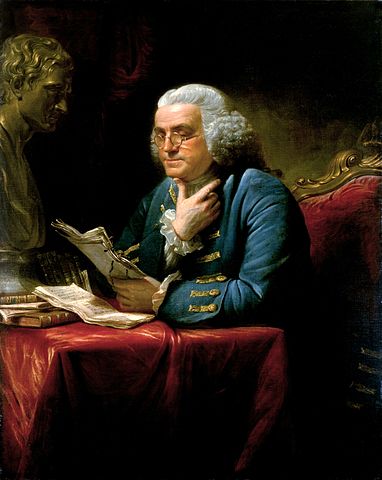
Benjamin Franklin with the expression he might have worn when he wrote of croakers (image: Wikimedia Commons)

By Dan Wilcock

I can only imagine the expression Benjamin Franklin wore when he wrote the delightful passage below in his autobiography. My guess is that he either sported a lopsided grin or pursed lips and twinkling eyes. At any rate, as with the best parts of the autobiography, Franklin’s discourse on “croakers” is a hoot that nonetheless contains some very sage advice.

“There are croakers in every country, always boding its ruin. Such a one then lived in Philadelphia-a person of note, an elderly man, with a wise look and a very grave manner of speaking; his name was Samuel Mickle. This gentleman, a stranger to me, stopt one day at my door, and asked me if I was the young man who had lately opened a new printing-house. Being answered in the affirmative, he said he was sorry for me, because it was an expensive undertaking, and the expense would be lost; for Philadelphia was a sinking place, the people already half bankrupts, or near being so; all appearances to the contrary, such as new buildings and the rise of rents, being to his certain knowledge fallacious, for they were, in fact, among the things that would soon ruin us. And he gave me such a detail of misfortunes now existing, or that were soon to exist, that he left me half melancholy. Had I known him before I engaged in this business, probably I never should have done it. This man continued to live in this decaying place, and to declaim in the same strain, refusing for many years to buy a house there, because all was going to destruction; and at last I had the pleasure of seeing him give five times as much for one as he might have bought it for when he first began his croaking.”

My translation: doomsday is overrated. We can always see it coming if we look for it. For a budding entrepreneur, as Franklin was at this stage of his life, croakers aren’t the best people with whom to hang around.  Their “certain knowledge” of our “sinking” state of affairs and impeding ruin foster the wrong mindset.

I don’t think Franklin is advising that we discount risks. He’s no fool. Rather, I think he’s saying that focusing exclusively on risks may be the biggest risk of all. The moral of the story can be seen when the croaker forks over five times what we would have for a house if he hadn’t believed that Philadelphia of the 1700s “was a sinking place.”

I think we can forgive Franklin for the schadenfreude he displays here.  The cheery sagacity with which he tells this tale makes it a classic.

The three-fold hero

King Arthur
King Arthur is one of the thousand faces of the universal hero (Image: Wikimedia Commons)

By Dan Wilcock

In The Hero with a Thousand Faces by Joseph Campbell, heroic myth functions on three levels:

1. The stories contained in the book

2. Campbell’s journey as a scholar

3. The reader’s experience

In other words, we read about heroic myth from a heroic scholar and, by doing so, experience the heroic for ourselves.

Reading it for the first time last month, I marveled at Campbell’s feverish prose. Take the book’s first paragraph–a sentence majestically gnarly in syntax and playful in content:

“Whether we listen with aloof amusement to the dreamlike mumbo jumbo of some red-eyed witch doctor of the Congo, or read with cultivated rapture thin translations from the sonnets of the mystic Lao-tse; now and again crack the hard nutshell of the argument of Aquinas, or catch suddenly the shining meaning of a bizarre Eskimo fairy tale: it will be always the one, shape-shifting yet marvelously constant story that we find, together with a challenging persistent suggestion of more remaining to be experienced than will ever be known or told.”

I was also struck by how, like an episode of Columbo, the villain of the hero’s quest is revealed at the very beginning. Here is what we get on page 15:

“The figure of the tyrant-monster is known to the mythologies, folk traditions, legends and even nightmares, of the world; and his characteristics everywhere are essentially the same. He is the monster, avid for the greedy rights of “my and mine.” The havoc wrought by him is described in myth and fairytale as being universal throughout his domain. This may be no more than his own household, his own tortured psyche, or the lives that he blights with the touch of his friendship and assistance; or it may amount to the extent of his civilization. The inflated ego of the tyrant is a curse to himself and his world – no matter how his affairs seem to prosper. Self terrorized, fear haunted, alert at every hand to meet and battle back the anticipated aggressions of his environment, which are primarily the reflections of the uncontrollable impulses to acquisition within himself, the giant of self achieved independence is the world’s messenger of disaster, even though, in his mind, he may entertain himself with humane intentions. Wherever he sets his hand there is a cry (if not from the housetops, then – more miserably – within every heart): a cry for the redeeming hero, the carrier of the shining blade, whose blow, whose touch, whose existence will liberate the land.”

This passage made my brain feel like it was bending. For someone like me living in 21st Century America, it isn’t too hard to look in the mirror and find the tyrant monster. We live in a culture that values “self achieved independence” and praises the “giants” of our society. Our culture inflates egos, and we may not notice that we are a curse to ourselves and the world “no matter how [our] affairs seem to prosper.”

I was struck by how Campbell focuses on “uncontrollable impulses to acquisition,” which made me think about the consumerist economy we inhabit. The tyrant’s greed sets him up as nature’s antagonist, which prevents him from a moment’s peace.

So who is the hero? Here’s Campbell on page 16:

The hero is the man of self achieved submission.

The book’s remaining 375 pages are a hallucinatory journey through the world of mythology that provides countless examples to illustrate this simple yet profound observation. It’s a journey I recommend wholeheartedly.

For me one of the best examples isn’t mentioned by Campbell (though I’m sure he encountered it): Hermann Hesse’s Siddhartha. The book’s main character, a young man in India who lived in the same time as the historical Buddha,  goes on a quest that echoes the Buddha’s life. The main character’s submission to enlightenment at the story’s conclusion illustrates perfectly Campbell’s point.

Hesse made Siddhartha another face of the Buddha. Campbell made his career a hero’s quest, from which thousands of readers launched their own journeys.

Medical bills and human freedom

By Daniel Wilcock

Time Magazine’s recent cover story on medical bills is an exhaustive, painful-to-read reminder about how out of whack America’s system of paying for health care has become. The stories of individuals not insured or covered under Medicare being charged 400% more than the Medicare rate for the same services reveals a bitter irony: those who have the least protection, such as the underemployed, get charged the most.

America has a problem with medical bills, the staggering proportions of which the article outlines:

“According to one of a series of exhaustive studies done by the McKinsey & Co. consulting firm, we spend more on health care than the next 10 biggest spenders combined: Japan, Germany, France, China, the U.K., Italy, Canada, Brazil, Spain and Australia. We may be shocked at the $60 billion price tag for cleaning up after Hurricane Sandy. We spent almost that much last week on health care.”

Reform measures, such as the Affordable Care Act, are vitally important—and not only for the sake of bending down the cost curve.  Human freedom and the pursuit of happiness are also in the mix.

As the Time piece attests, Medical bills are an ever-present risk for everyone, especially those not covered by private insurance or government programs.  The risk of medical bills ties workers to jobs.  Starbucks deserves praise for offering family health insurance to part-time workers (a financial lifeline).

In a column called “A world without work,” New York Times columnist Ross Douthat wrote last week about how we are heading into a new labor paradigm where work becomes scarcer:

“IMAGINE, as 19th-century utopians often did, a society rich enough that fewer and fewer people need to work — a society where leisure becomes universally accessible, where part-time jobs replace the regimented workweek, and where living standards keep rising even though more people have left the work force altogether…Yet the decline of work isn’t actually some wild Marxist scenario. It’s a basic reality of 21st-century American life, one that predates the financial crash and promises to continue apace even as normal economic growth returns.”

Sounds intriguing, but the trend in medical bills makes this picture less rosy, both for individuals and for the government.

I’m all for a society in which people are free to pursue endeavors that give them purpose, rather than just holding down jobs. In the society that Douthat describes, this kind of freedom might become more commonplace. The financial plan presented in the popular book “Your Money or Your Life” helps thrifty people work to a level of wealth in which it’s no longer necessary to work a 9 to 5. This gives them time to pursue things that matter to them and to their communities. Yet the risk of medical bills can scotch the freedom dreams of even the most prodigious wealth accumulators.

America faces a massive challenge in fixing this impediment to freedom. My guess is that the next couple of decades will present many dilemmas that will force some big fixes. Hopefully we’ll be able to look back on this Time cover story as a turning point.

Happily, health and wealth are unlike dental care

Image
(Photo: Wikimedia Commons)

By Daniel Wilcock

Yesterday I got dental fillings for the first time. Two tiny cavities. It made me realize that human beings are lucky that health and wealth are, for the most part, unlike dental care.

Sure, there are similarities. Brushing and flossing, working out and achieving financial goals all take discipline. The big difference: dental decay cannot be reversed. Health and wealth deficits usually can.

There are exceptions to this, of course (incurable disease, etc), but for the most part humans enjoy a striking plasticity of wellness.

I only wish my poor teeth did too. Guess I’ll just have to brush and floss more often.

5 wise books about money

By Daniel Wilcock

A lot of financial media aimed at the general public are little better than carnival barking. Now that the Dow and S&P are back at pre-recession levels, the carnival has returned to town.

Like many wiser than myself, I think it’s best to ignore the noise and stick to a fundamental strategy: living below one’s means, acquiring a balanced portfolio of appreciating assets, minimizing fees.

Short of hiring an enlightened advisor (on a flat fee rather than commission basis), which is probably the preserve of more affluent individuals, I think most people are best off schooling themselves with some basic books that inspire wisdom and good choices.

I’d love to hear your suggestions for this list. Here are my five favorites, with a few words about each:

MNDThe Millionaire Next Door by Thomas J. Stanley and William D. Danko

At the top for the laser-like precision with which it cuts through illusions about wealth. In a few words: persons whose net worth rises above $1 million in a single generation are usually frugal and self-sufficient. The authors back this up with a lot of data. This runs counter to what marketers, particularly those who sell luxury, would have us believe.

YMOYLYour Money or Your Life by Vicki Robin, Joe Dominguez and Monique Tilford

This is unashamedly a self-help book, and a very good one at that. The authors observations about how our money decisions have lifelong impacts on our well-being (at each level from individual to global environment) are compelling and, for most people, life changing.

InfInfluenceluence: The Psychology of Persuasion by Robert Cialdini

This book is a skeptic’s delight. Not a book about money per se, but nonetheless an indispensable guide to the mental minefield in which we live. Were you ever curious why surveys are so often deployed by people who want our money or our votes? Ever feel the need to reciprocate a token gift? Ever wondered why the higher-priced item is more alluring? Cialdini’s book exposes the mechanics or persuasion and helps us step back from money traps.

RandomA Random Walk Down Wall Street by Burton G. Malkiel

A manifesto aimed squarely at investors who might otherwise be ripped off by Wall Street profiteers. Malkiel claims that a monkey throwing darts at the markets page could make the same quality picks as most fund managers, and backs the assertion up nicely. His book made me a proponent of low-fee “no-load” index investing. Like John Bogle, the founder of Vanguard who helped invent index investing, Malkiel’s the little guy’s friend.

BabylonThe Richest Man in Babylon by George Clason

Humans love stories. As Joseph Campbell taught us, our culture is infused with parables. These are parables that feature characters in ancient Babylon and teach timeless wisdom. Admittedly, some of the language, such as “Start thy purse to fattening,” is kind of corny. Yet simple stories stay with us, and this is about as simple as it gets.

P.S. To get a head start on actualizing the lessons in these books, check them out from the library!

Market’s back, but people aren’t

Dow high
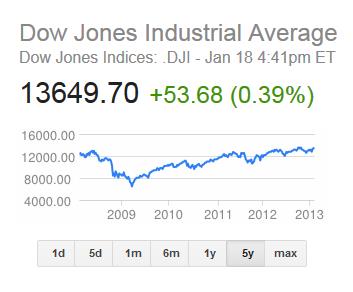
The Dow hit its highest point since December 2007 this week. (Image: Google)

By Daniel Wilcock

The American stock market, as measured by both the Dow Jones Industrial Average and the S&P 500, closed yesterday at its highest level since December 2007.

Ordinarily, as a low-cost index investor, I agree with market sages such as Burton Malkiel and John Bogle, who caution investors not to pay much attention to the daily soap opera of market fluctuations. But somehow this particular milestone means something to me.

In April of 2008, I relocated to the States from Japan, where I’d been living the previous two years. Luckily, I found a nice writing job at Georgetown University (a relatively safe harbor within stormy seas) shortly before the markets went to hell and employers started shedding their payrolls. When the Lehman collapse happened, I can clearly recall the indexes going down 5% each day for several consecutive days.

Those dark days always made me flash back to the summer of 2007, when my wife and I took a honeymoon in Finland and Denmark. Each day, I had the luxury of perusing the International Herald Tribune in a leisurely way. That splendid summer, the financial news was filled with warnings of a coming market catastrophe, evidenced by the failure of some mortgage-related funds at Bear Stearns.  Yet the market continued to go up in the following weeks.

We may be approaching a conclusion to those days of frozen credit and a hemorrhaging housing market. In my opinion (which I admit is quite different from Wall Street types), The Consumer Financial Protection Bureau is leading our housing and credit economies to a brighter future. In this regard America may be learning something from Canada, which didn’t have a mortgage crisis.

But what about the 8% of workers in America and more than 50% of young people in countries like Spain who wish to enter the workforce, but can’t find their way? I’m looking for ways to be optimistic about the future of labor in the new era we’ve entered. B corporations and the GIIRS index inspire me, as do companies and organizations that take environmental and community sustainability seriously.

The market’s return is an indicator of our collective wealth. The unemployment problem is an indicator of our collective poverty. My hope is that our markets will evolve and bring their productivity to bear on the social and environmental problems we face.

Idealistic, yes. Naive, perhaps. But optimists live better lives.

‘Baseball’ by George Vecsey

Babe Ruth
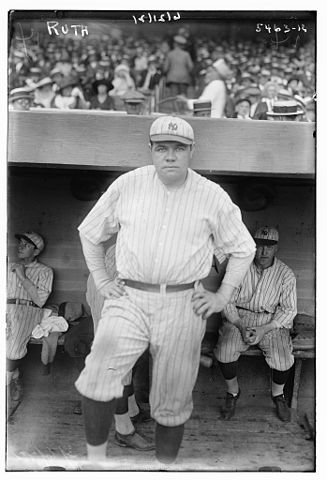
Babe Ruth, baseball’s savior (Library of Congress via Wikimedia Commons)

By Daniel Wilcock

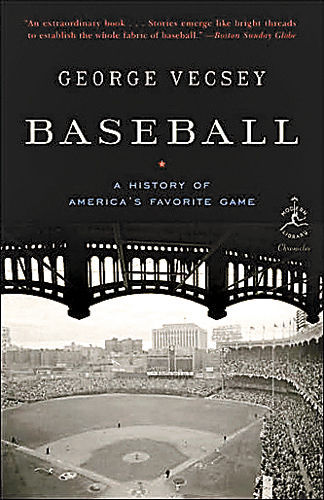
Book review: ‘Baseball: A History of America’s Favorite Game’ George Vecsey  (2006, Modern Library, $14)

“Brevity is the soul of wit”—William Shakespeare

A simple idea runs through much of literary history: concise writing is harder, but better. Attributed to a wide range of writers, from Cicero to Mark Twain, this concept is best exemplified by Lincoln’s Gettysburg address.

For the last few decades, baseball has inspired a steady stream of 700-page tomes, many of which focus exhaustively on a single player or season. George Vecsey’s 2006 book Baseball boils the lot down to a scant 200-some-odd page collection of editorial-style vignettes.

Vecsey, a New York Times columnist, doesn’t hide his opinions. He grew up a Brooklyn Dodgers fan, though he adores their nemesis Stan ‘The Man’ Musial—about whom he recently wrote a 400-page biography. He considers the steroid-ball of the 90s and early 00s a catastrophe, but still has admires grudgingly the villains (erstwhile heroes) of the era.

Baseball
Baseball by George Vecsey

Despite his love for the Brooklyn Dodgers and Musial, it’s Babe Ruth who for Vecsey personifies baseball. Here’s part of his paean to the Great Bambino:

 “Babe Ruth saved baseball—and saves it still, truth be told. With Barry Bonds and other latter-day sluggers permanently tainted by steroid suspicions, the good old Babe looks better and better.

Ruth was not only the greatest player in the history of the game but he was also a rollicking, likable, outsized character who arrived at precisely the right moment. He dominated the nation during a decade devoted to change (women gained the right to vote in 1920) and avoidance (Prohibition was enacted that very same year, and promptly bypassed by a huge swath of the country). Who better to personify this coming-of-age decade, the Roaring Twenties, than a barrel-chested, pigeon-toed hedonist known as the Babe.”

If you like the above passage, its commentary rendered elegantly from a 10,000-foot vantage point, you’ll probably like the rest of the book. I certainly did. Just as the Gettysburg Address stood in contrast to the two-hour oration that preceded it, this short book is a keeper among baseball books.

I say it each winter: Can’t wait until April.