At the risk of having none of them come true, here are my 2013 resolutions. In the past I have kept the kind of resolutions which I can track easily, where success or failure is self-evident. For the year of the snake, I decided to turn the dial all the way to the left and set resolutions that are harder to quantify and perhaps more likely to be a daily inspiration.
This devastating New York Times story about last month’s factory fire in Bangladesh, in which 112 workers perished because they were trapped by both the flames and their managers, is a wake up call.
I think it’s time to purchase fewer “brand” goods produced in places where almost none of the high purchase price commanded by the brand makes it into workers’ hands.
Granted, it’s hard to tell these days which products are produced sustainably. I’d be very curious to know how the Nike running shoes I typically buy, which are made in China, break down in terms of who receives what. My guess is that if I’d like to live by the above axiom, I’d have to find some different sneaks.
The b corporation model is the way forward. Consumers can affect change incrementally with their choices.
My hope is that what happened at Tazreen Fashions Ltd. in Bangladesh is also wake up call for those with the power to make macro changes, from heads of state to brand CEOs.
(Image: Amazon.com—No, I did not read this in French)
By Daniel Wilcock
Book review: The Dip, Seth Godin (Portfolio, 2007)
Grabbing The Dip from the library shelf, I almost chuckled. I’d previously come across the author, Seth Godin, in a TED talk where he appears to be channeling Steve Jobs (black long-sleeved shirt, blue jeans, lack of hair). I thought that the book’s title might be eponymous.
I checked out the book anyway because my professor spoke so highly of Godin’s work. Plus the text looked like it could be digested in two or three hours. I’m glad I persisted (though some reservations are listed at the end of this review). Godin is a good conceptual thinker, and this little book contains a powerful heuristic approach for becoming “the very best in the world,” an accomplishment he claims is “seriously underrated.”
“The dip” refers to the difficult stage of any project in which the pros put significant distance between themselves and their competition. It’s the period of time characterized by apparently diminishing results when quitting and settling for mediocre results are far more tantalizing than “leaning into” the dip and breaking through.
People and companies that become the best in their field don’t quit in the dip, rather they recognize it as an opportunity to break away from the herd. Knowing that things are much easier on the other side of the dip, they push through trials and establish themselves as the best. Having made it through the dip, established pros are in the enviable position of being able to call the shots.
Seth Godin (Image: Wikimedia Commons)
Godin says that dips can sometimes turn out to be cul-de-sacs (AKA the dead end job), in which there’s no upside to additional effort, or cliffs, in which business is looking up until you find yourself hurtling into a ravine. It takes foresight, self-awareness and coup d’oeil to recognize these trap patterns and differentiate them from the dips in which you can show your stuff.
And what do you do when you recognize a trap? Quit.
A lot of this book is about quitting decisively. Godin writes that most of the things we learn in school about life are wrong, especially the focus on being well-rounded (you need to get at least a B in all of your classes). In the free market, Godin implies, it’s ok for adults to get an A+ in one subject and drop all the others. To him, it’s admirable to be a quitter. The most successful people generally quit the things that don’t count (and they are very good about choosing what does count). I think this is a wise observation which most professionals should at least consider, even if the idea of quitting being valuable doesn’t sit well.
Yet, I have reservations about this book. Godin’s talent as a writer who straddles the line between business analysis and self-help is amply evident. This book is fun to read and its message is infectious. It gave me that warm “now I understand the world a bit better” feeling that characterizes the very best self-help books. To me that feeling is always a bit of a warning sign that I may be buying into too many assumptions without thinking through implications.
Questions arise: Should look out for ourselves first when quitting hurts others? Is a relentless drive to be “the very best in the world” just egotism? By becoming the king of the hill, should you push newcomers back into the dip or pull them up behind you?
I think most of my reservations center around Godin’s choice to focus on being best. He’s on far firmer ground when he discusses things in terms of success. Of course, “the very best” sounds a lot better than successful, but successful is a far bigger and happier cosmos in which your star can shine.
“A journey of a thousand miles begins with a single step” — Lao Tzu
(Image: Wikimedia Commons)
In Japan, large numbers tend to be counted in units of 10,000. America’s $100 bill loosely equals Japan’s 10,000-yen note. When buying a car, Japanese think in terms of how many “man,” or 10-000 yen notes, they will pay.
This tendency, combined with the nation’s love of gadgets, created a perfect opportunity in post-war, pre-bubble Japan to market a gizmo that counts paces. A research paper in the journal Medicine & Science in Sports & Exercise recounts this history:
“A value of 10,000 steps is often associated with a healthful level of PA [physical activity] and is commonly promoted… This increasingly popular index can be traced to the 1960s when Japanese walking clubs embraced a pedometer manufacturer’s (Yamasa Corporation, Tokyo, Japan) nickname for their product: manpo-kei (literally translated, ‘‘ten thousand steps meter’’). Subsequently, Dr. Yoshiro Hatano studied typical steps per day of various lifestyles and established that 10,000 steps translated to approximately 300 kcal for an average middle-aged Japanese man.”
In recent years, 10,000 steps have become globally understood code words. Millions of people have been exposed to the number as the ideal daily walking goal. Yet making it to the 10,000 mark each day can be tough as for most adults. It means about 5 miles as the crow flies.
But anyone who simply can’t cram such a lofty goal into their busy lives can take heart. The study referenced above concludes that 3,000—4,000 steps over a 30 minute period, when added to the number of steps normally taken in a day, lead to better health. This conclusion has been massively popularized by the YOU: On a Diet book by Michael Roizen and Mehmet Oz, which I’d recommend to anyone who wants to understand the scientific mechanics of weight gain and how to reverse it.
I’m convinced that adding almost any amount of extra walking to one’s routine adds a certain zest to the day. I also think it helps maintain focus during working hours as walking can be a powerful form of meditation. Walking without headphones, I believe that my mind begins to process and sort all of the riddles, both conscious and subconscious, that have been stacking up over time. I also think many of our best heuristic approaches, our strategies for living well, come to us while we are out for a walk.
Finally, knowing how powerful the number 10,000 is in Japanese culture, I think this may be one of the nation’s least recognized but most powerful exports. Since westerners tend to think in units of one thousand, adding an extra zero provides a slightly higher target at which they can aim.
But no matter how high the aim, as Lao Tzu said: the journey begins with a single step.
Marketing Lessons from the Grateful Dead: What Every Business Can Learn from the Most Iconic Band in History (2010, John Wiley & Sons).
Marketing and the Grateful Dead are two nouns that don’t sit well in the same sentence—like sticking the positive poles of two magnets together. But do our stereotypes deceive us? Could the suits upstairs learn a lot from the longhairs and bearded iconoclasts of Uncle John’s Band?
Answering affirmatively are authors and lifelong Deadheads David Meerman Scott (who also wrote The New Rules of Marketing & PR) and Brian Halligan (Founder and CEO of Hubspot, a marketing software company).
In this enjoyable pocket-sized volume, they posit that the Grateful Dead were decades ahead of the curve in terms of how B2C businesses should relate to customers. Their marketing-guru careers have been inspired by the Dead and their passion for both subjects shines through.
Jerry Garcia of the Grateful Dead (image: Wikimedia Commons)
The band’s actions, from their encouragement of bootleg recordings to their liberal brand licensing practices, foretold today’s social-media-driven world of sharing and consumer empowerment.
By raising a freak flag for millions to follow, they pioneered “inbound” marketing (Hubspot’s specialty), where customers and clients drive themselves to the information they seek.
Throughout the book, the authors use examples of current companies such as New Belgium Brewing and MySQL that demonstrate how such actions can lead to real success in today’s business world.
Meerman Scott and Halligan keep things light and entertaining . They team up with longtime Grateful Dead artist Richard Biffle, who contributes some nifty illustrations throughout. You can sense the authors’ internet design expertise spilling over into this neatly designed little text.
Some folks think that Barnes is the true expert on this subject and that Meerman Scott and Halligan scooped him by quickly putting out a book first. Since I’ve never read Barnes, I don’t know where I stand on that issue. But the discussion does make me want to read Barnes’s book too.
The greatest value of Meerman Scott and Halligan’s book can be found in the counter-intuitive strategies it presents. Below is my distillation of 8 of these strategies, which are exemplified by the Dead’s long strange career:
1) Be yourself and do what you love – by following their own “Dark Star” and indulging their musical (and other) passions, fans came to view the band as not only talented, but also authentic and honest.
2) Create and nurture a community – Deadheads often use the word “kind.” The band encouraged a massive following by putting fans first in many ways. That community soon took on a life – and a momentum – of its own, following the band endlessly around the world.
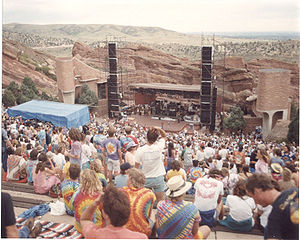
Grateful Dead fans at Red Rocks (image: Wikimedia Commons)
3) Don’t control people – one of the best examples of how fans came first was the band’s attitude toward bootleg recording at concerts. Their openness to this practice turned casual fans into evangelists, a precedent for success in today’s file-sharing social media marketplace.
4) Judge not – this openness extended to the ‘everyone’s welcome’ vibe at their concerts. Eccentric and straight-laced music lovers alike could feel at home (as long as they didn’t mind a bit of wafting smoke).
5) Don’t rip people off, they are your best customers – The Dead set up their own ticketing system to help ensure that their fans would not be price gouged by profit-driven companies. This gave them a mysterious degree of control to reward the biggest fans (who would mail to the band postal money orders in elaborately decorated envelopes) the best seats. This built intense loyalty.
6) Let others riff on your brand – liberal licensing agreements with vendors using their artwork to sell merchandise at concerts allowed a diverse community of artists to strengthen, refine and redefine the brand. The authors argue that today’s companies should encourage their employees to do the same.
7) Ride the technological wave – The Grateful Dead were famous for their custom-engineered sound systems, mixing-board recordings and encouragement of sharing. As a result, their business transitioned seamlessly to the web and then web 2.0.
8) Remain open to all kinds of innovation – the living band members still perform together and are not afraid of pushing the envelope — from creating cutting edge tour apps to selling concert goers live recordings of the performance they just heard only minutes after the show.
If you’d like to experience Meerman Scott and Halligan’s message directly, here are some action items:
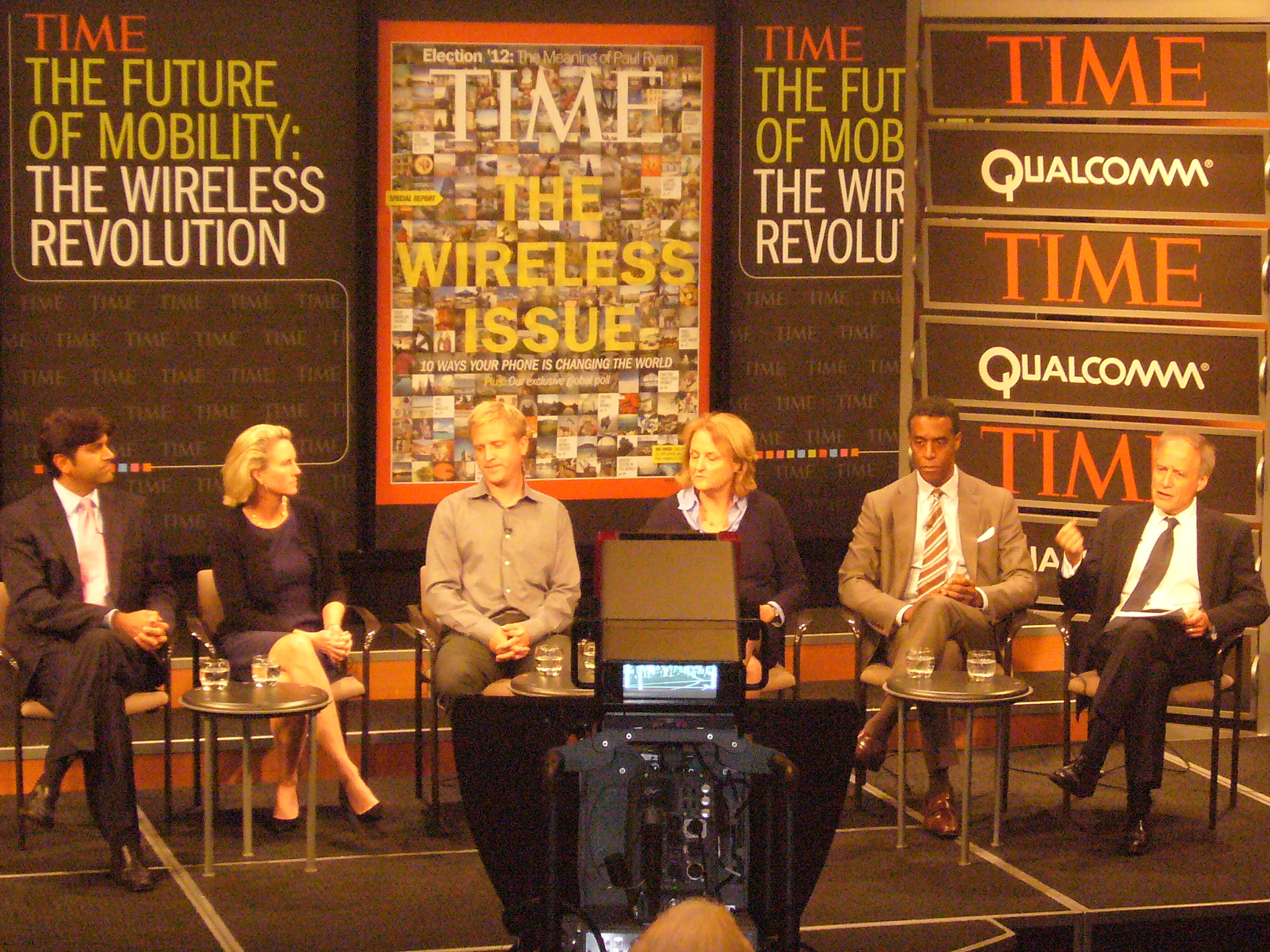
Left to Right: Aneesh Chopra, senior advisor at the Advisory Board Company; Isobel Coleman, Senior Fellow at the Council on Foreign Relations; Matt Flannery, co-Founder and CEO of Kiva; Judith McHale, president and CEO of Cane Investments, LLC; Rey Ramsey, president and CEO of TechNet and Jeff Kluger, Senior Editor, Time (moderator)
By Daniel Wilcock
This week Time magazine hosted a panel discussion called the Future of Mobility:The Wireless Revolution at the Newseum in Washington, D.C.
On Time‘s website you can watch an except of the keynote Q&A between Travis Kalanick, CEO of Uber (“everyone’s private driver”), and Time‘s Michael Duffy.
The other panelists, listed above, didn’t spend much time talking about the future. Yet they did come up with some curious observations. Here are eight of the best:
1. Duffy’s guess as to why Kalanick created Uber: “It was for swag.”
2. McHale: “There’s a dark side of technology.”
3. Ramsey: Hundreds of thousands of jobs created by the worldwide app marketplace are “one of the few good news stories about the economy.”
4. Chopra: “The blue button will empower patients.”
5. Coleman: Mobility technology has replaced the “proverbial well” where villagers would gather to exchange gossip.
6. Coleman: “We’re on the cusp of massive transformation” in Africa, thanks to undersea data cables.
7. Flannery: Speaking of Kiva: Only $1 million out of $350 million has been stolen.
1. To pass e-Business/Social Media Technology Trends, taught by John Gilroy, veteran technologist and radio personality extraordinaire.
2. Beyond school books and dirty looks, to share thoughts on a wide range of topics with people I care about and total strangers alike. Well, duh, it’s a blog.
3. To riff on social media with effervescent wit. Yeah right.
4. When the mood strikes, to go very deep into an issue or topic I care about. This is unlikely to involve kittehs–sorry to dissapoint–but your suggestions are welcome.
5. To provide a space to explore and, in some limited sense, an exploration of space.







 Trails and Talismans